Hyperpigmentation 101: How to Fade Dark Spots Without Damaging Your Skin
Introduction: Why Hyperpigmentation Matters in Black Skin
If you’ve ever dealt with stubborn dark spots that seem to linger for months—or even years—you’re not alone. Hyperpigmentation is one of the most common skincare concerns among Black women, and it can feel frustrating when over-the-counter products don’t deliver results.
But here’s the truth: fading dark spots in richly melanated skin is possible when you use the right ingredients, the right routines, and most importantly, patience.
At Velvet Melanin, our mission is to create a safe, trusted space where Black women can get skincare advice tailored to our unique needs. Hyperpigmentation is not a flaw—it’s our skin’s natural response to inflammation, irritation, or injury. The key is learning how to treat it safely, without damaging our skin barrier.
This guide—Hyperpigmentation 101—will break down everything you need to know:
- What causes dark spots in Black skin
- The difference between hyperpigmentation and other skin conditions
- Safe and effective ingredients that actually fade dark spots
- Common mistakes to avoid
- How to build a skincare routine for long-term, radiant results
What Causes Dark Spots in Black Skin?
Before we jump into solutions, let’s understand the problem.
1. Inflammation & Injury (Post-Inflammatory Hyperpigmentation, or PIH)
For Black skin, almost any irritation can leave behind a dark mark. Think:
- Acne breakouts
- Bug bites
- Eczema flare-ups
- Aggressive scrubbing or harsh products
When the skin is injured or inflamed, melanocytes (the cells that produce pigment) go into overdrive, leaving behind a darker patch.
2. Hormonal Changes (Melasma)
Some women experience hormonally driven hyperpigmentation—often called melasma—which shows up as symmetrical dark patches on the face. Pregnancy, birth control, or hormone fluctuations can trigger this.
3. Sun Exposure
UV rays don’t discriminate. Even though melanin-rich skin has a natural SPF of about 13, that’s not enough protection against sun-induced hyperpigmentation. Skipping sunscreen is one of the fastest ways dark spots deepen and linger.
4. Skin Sensitivity to Harsh Products
Bleaching creams, strong peels, and overly aggressive exfoliants can backfire, leaving skin raw and even darker afterward.
Why Hyperpigmentation in Black Skin Is Tricky
Unlike lighter complexions, Black skin is prone to developing post-inflammatory hyperpigmentation more easily and more intensely. That’s why treatments must be gentle, consistent, and safe.
Quick fixes—like bleaching creams or high-strength acids—may seem tempting, but they often do more harm than good. Instead, the focus should be on:
- Calming inflammation
- Supporting the skin barrier
- Using proven brightening agents in safe concentrations

Safe and Effective Ingredients for Fading Dark Spots
When it comes to treating hyperpigmentation in Black skin, not all ingredients are created equal. Here’s what actually works:
1. Niacinamide (Vitamin B3)
- What it does: Reduces pigment transfer from melanocytes, strengthens the skin barrier, and calms redness.
- Why it’s good for Black skin: Gentle, hydrating, and effective without irritation.
- How to use it: Look for serums or moisturizers with 5% niacinamide for daily use.
2. Azelaic Acid
- What it does: Brightens dark spots, reduces acne, and soothes inflammation.
- Why it’s good for Black skin: Safe for all skin tones, pregnancy-safe, and great for those with sensitive or acne-prone skin.
- How to use it: Start with 10% formulas, working up to higher concentrations if tolerated.
3. Vitamin C (L-Ascorbic Acid or Derivatives)
- What it does: Antioxidant that brightens skin, boosts collagen, and fights UV damage.
- Why it’s good for Black skin: Protects against further hyperpigmentation and evens skin tone over time.
- How to use it: Use a stabilized Vitamin C serum in the morning, paired with sunscreen.
4. Retinoids (Retinol, Adapalene, Tretinoin)
- What it does: Speeds up cell turnover, fades pigmentation, prevents clogged pores.
- Why it’s good for Black skin: Addresses both acne and the dark spots it leaves behind.
- How to use it: Start low and slow—2–3 nights a week—and always pair with sunscreen.
5. Tranexamic Acid
- What it does: Targets stubborn pigmentation, including melasma.
- Why it’s good for Black skin: Works well when combined with niacinamide or Vitamin C.
- How to use it: Often found in serums or creams as a supportive ingredient.
6. Exfoliating Acids (AHAs like Lactic Acid, Mandelic Acid)
- What it does: Gently removes dead skin cells and allows other ingredients to penetrate deeper.
- Why it’s good for Black skin: Lactic and mandelic acid are gentler compared to glycolic acid, making them safer for melanin-rich skin.
- How to use it: 1–2 times a week, not daily, to avoid irritation.
Ingredients to Avoid (or Use with Caution)
Some products marketed for “skin lightening” can be dangerous for Black skin:
- Hydroquinone: While effective in dermatologist-guided treatments, over-the-counter misuse can lead to ochronosis (permanent skin darkening).
- High-strength glycolic acid peels: Can cause burns and worsen pigmentation.
- DIY remedies like lemon juice or baking soda: Harsh, damaging, and not backed by science.
Building a Skincare Routine for Hyperpigmentation
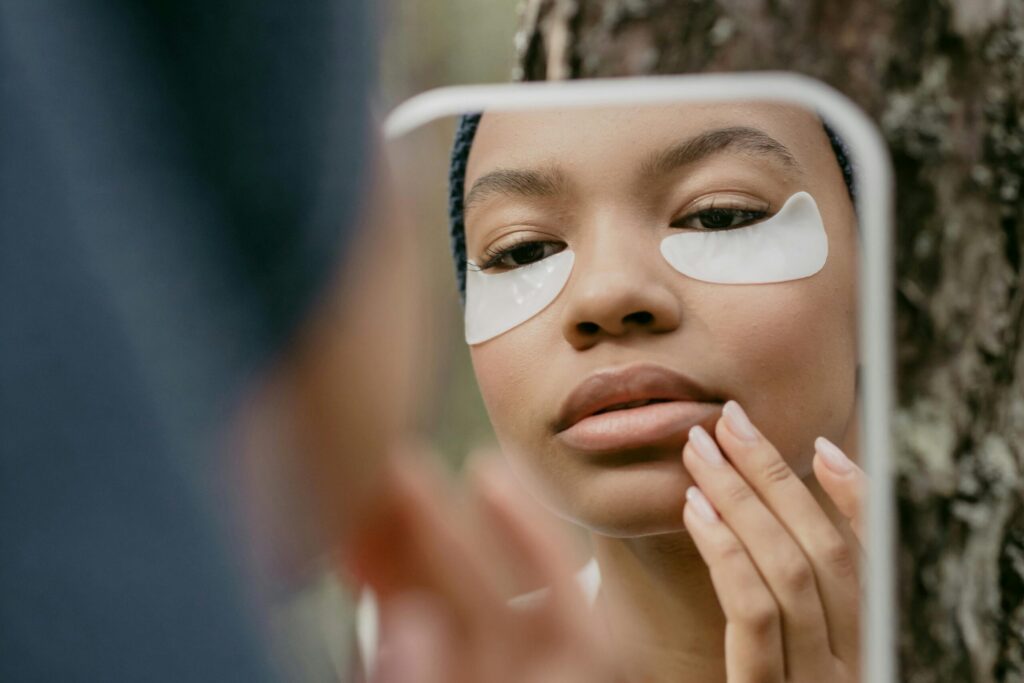
Here’s a safe and effective blueprint:
Morning Routine
- Gentle Cleanser
- Vitamin C Serum (or Niacinamide)
- Moisturizer
- Broad-Spectrum Sunscreen (SPF 30 or higher)
Evening Routine
- Gentle Cleanser
- Niacinamide or Azelaic Acid Serum
- Moisturizer
- Optional Retinoid (2–3 nights a week)
Pro Tip: Consistency is more important than intensity. Fading hyperpigmentation can take 8–12 weeks or longer.
Common Mistakes That Make Dark Spots Worse
- Skipping sunscreen – UV exposure undoes progress.
- Popping pimples – Picking leaves behind darker scars.
- Layering too many actives at once – Leads to irritation and rebound pigmentation.
- Not patch testing – Always test new products to avoid allergic reactions.
Lifestyle Habits That Support Even Skin
- Diet rich in antioxidants (berries, leafy greens, omega-3s) supports skin repair.
- Stress management helps reduce inflammatory flare-ups.
- Adequate hydration keeps skin barrier healthy.
- Sleep gives skin time to regenerate.
When to See a Dermatologist
If your dark spots are spreading, resistant to over-the-counter treatments, or linked to hormonal changes, it’s worth consulting a dermatologist. Prescription options (like tretinoin or hydroquinone under supervision) can make a huge difference.
Final Thoughts: Loving the Skin You’re In
Hyperpigmentation may be one of the biggest skincare struggles for Black women, but it doesn’t have to steal your glow. With the right approach—gentle, consistent, and safe treatments—you can fade dark spots and reveal the even-toned, luminous skin beneath.
At Velvet Melanin, we believe in celebrating our rich, diverse skin while equipping women with the tools to care for it properly. Remember: your skin is not flawed—it’s powerful, protective, and beautiful.
If you found this guide helpful, share it with a friend, and stay tuned for more skincare wisdom designed especially for melanin-rich skin.

VelvetMelanin
🌟 Welcome to Glowing in Your Melanin! 🌟 Your skincare journey just leveled up - you’ve just found your new skincare sanctuary! This is the space where melanin-rich skin is celebrated, nourished, and empowered. We’re serving real skincare tips, glow-up routines, and product reviews made just for us. Because your skin isn’t an afterthought -it’s the blueprint. 👑 Sign up to stay in the glow! Let’s build a community that glows together. This is more than a page - it’s a community of queens uplifting queens.